



In chaotic Minneapolis protests, minutes later, she was shot and killed by ICE officer.
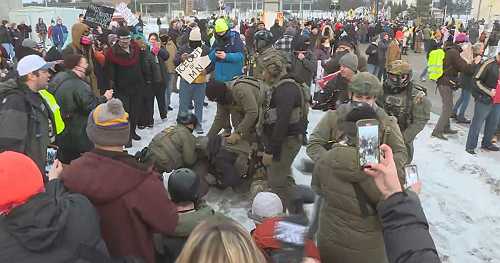 CHAOS ERUPTS IN MINNEAPOLIS AS FEDERAL AGENTS CLASH WITH PROTESTERS OVER DEADLY ICE SHOOTING
The city of Minneapolis is reeling in the aftermath of a deadly shooting by a U.S. Immigration and Customs Enforcement (ICE) officer, leaving one woman dead and sparking widespread outrage and protests across the nation.
As tensions boiled over on Thursday morning outside the Whipple Federal Building in Minneapolis, federal officers fired pepper balls and surged into a crowd of protesters, triggering chaos and panic among the demonstrators. The scene was chaotic, with shoving, screams, and chemical irritants filling the air as law enforcement attempted to disperse the crowd.
But this wasn't just any ordinary protest – it was a cry for justice from a community that feels terrorized by the presence of 2,000 federal law enforcement members in their midst. "Everybody is staying home," said Trish, a mother and grandmother who joined the protests. "This is a big community with lots of different families, and people can't go to work, kids can't go to school because they are terrorizing people."
The anger and frustration were palpable as hundreds gathered outside the federal building, including first-time protesters like Patrick, who spoke out against ICE despite supporting the military. "I am ashamed of ICE," he said. "It has been building – I think the rhetoric with the governor and the president and Kristi Noem – it has just been building, for sure. It has tipped over."
The deadly shooting that sparked this outrage occurred on Wednesday during an ICE operation in a south Minneapolis neighborhood. Renee Good, 37, was shot and killed in her car, leaving behind a community in shock and grief.
As the nation grapples with the implications of this tragedy, one thing is clear: the actions of ICE have consequences that go far beyond the individuals directly involved. The presence of federal law enforcement in communities like Minneapolis can be a source of fear and intimidation, disrupting daily life and eroding trust between law enforcement and the public.
But amidst the chaos and anger, there are also moments of hope and resilience. As protesters stood their ground against pepper balls and chemical irritants, they sent a powerful message: that they will not be silenced or intimidated by those in power.
"This is a moment for us to come together as a community," said Trish. "We need to stand up for what's right, even when it's hard."
As the nation watches this unfolding drama, we are reminded of the importance of standing up for justice and human rights – even in the face of overwhelming odds. The protests in Minneapolis may be chaotic, but they are also a testament to the power of collective action and the unwavering commitment to creating a more just and equitable society.
As we move forward from this moment of crisis, let us remember the words of Patrick: "I would say that it has been building – I think the rhetoric with the governor and the president and Kristi Noem – it has just been building, for sure. It has tipped over."
The question now is: what will we do next? Will we continue to allow the actions of ICE to terrorize our communities, or will we stand up for justice and demand change?
The answer lies in the streets of Minneapolis, where protesters are refusing to back down in the face of overwhelming force. As one protester said, "As an American, I have a right to protest." And it's time for us all to exercise that right – together.
What do you think? Share your thoughts and reactions in the comments below. Let's keep the conversation going!
Topic Live